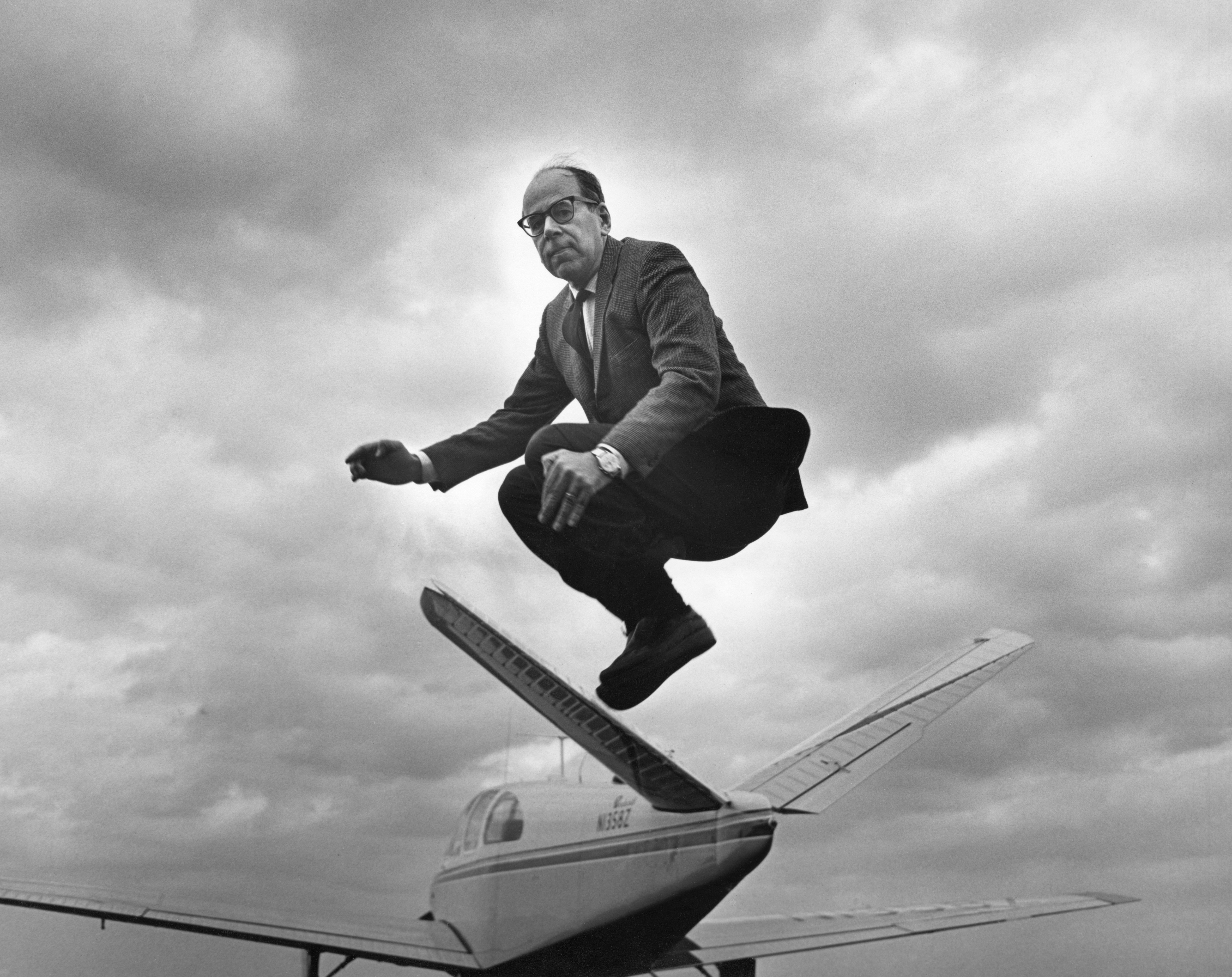
Photo by Philippe Halsman © Philippe Halsman Estate 2026
Michael Strasser für Kunst im
öffentlichen Raum Tirol
HALSMANJUMP Erinnerung in Bewegung ist ein interaktives, partizipatives Kunstprojekt, das die bewegte Lebensgeschichte des jüdisch-lettischen Fotografen Philippe Halsman und den weitgehend vergessenen Justizskandal von 1928/29 in Tirol als Ausgangspunkt nimmt. In einer Zeit geprägt von wachsenden gesellschaftlichen Spannungen – zwischen Angst, Wut, Zuversicht und Hoffnung – stellt das Projekt Fragen nach Sichtbarkeit, Erinnerung und Beteiligung.
Das Projekt bewegt sich im Spannungsfeld von Körper und Emotion, von kollektiver Erinnerung und individueller Verarbeitung. Der Moment des Sprungs – körperlich wie symbolisch – wird zur Geste gegen das Erstarren angesichts historischer Ungerechtigkeiten, zur Intervention im öffentlichen Raum, zur Einladung an die Gesellschaft, sich selbst mit Fragen nach Antisemitismus, Ausgrenzung und der Macht von Vorurteilen auseinanderzusetzen. Die eigens für das Projekt entwickelte Webseite gewährt durch Texte von Histori-ker:innen einen tieferen Einblick in die Geschichte und den Gerichts-prozess und wird durch die Möglichkeit die eigenen Sprungfotos zu veröffentlichen, zu einer digitalen Gedenkplattform.
Philippe Halsman (1906–1979) wurde in Riga geboren und zählte später zu den bedeutensten US-amerikanischen Portraitfotografen des 20. Jahrhunderts. 1928 kam es während einer Wanderung in den Tiroler Alpen zu einem tragischen Vorfall: Sein Vater kam ums Leben, und Halsman wurde – trotz einer sehr umstrittenen Beweis-lage – in Innsbruck wegen angeblicher Beteiligung verurteilt. Der Prozess erregte internationales Aufsehen; nach mehreren Jahren Haft wurde er vor allem durch den unermüdlichen Einsatz der Familie und prominenter Unterstützer:innen (u. a. Albert Einstein, Thomas Mann) 1930 begnadigt und freigelassen. Halsman ging zunächst nach Frankreich, wo er als Portraitfotograf für Magazine wie Vogue arbeitete. Auf der Flucht vor den Nationalsozialisten emigrierte er 1940 in die USA. Dort entwickelte er sich zu einem der gefragtesten Fotografen seiner Zeit. Über 100 seiner Portraits erschienen auf dem Cover des Life-Magazins, und er arbeitete mit Persönlichkeiten wie Marilyn Monroe, Salvador Dalí, Albert Einstein und Richard Nixon.
Berühmt wurde Halsman auch durch seine „Jumpology“ – eine Portraittechnik, bei der er seine Modelle zum Springen einlud. Er war überzeugt, dass sich in diesem Moment die Selbstkontrolle löse und ein authentischer, ungezwungener Ausdruck entstehe. Seine „Jump“-Serie umfasst über 200 Prominente und gilt als humorvoller wie psychologischer Höhepunkt seines Werks. Hier zu sehen ist ein Selbstportrait im Sprung, auf einem Flugfeld vor einem Leicht-flugzeug. Philippe Halsman starb 1979 in New York. Sein Werk verbindet technische Präzision, psychologischen Scharfsinn und
oft spielerische Kreativität.
HALSMANJUMP Memory in Motion is an interactive, participatory
art project that seeks to make visible both the eventful life story of the Jewish-Latvian photographer Philippe Halsman and the largely forgotten miscarriage of justice of 1928/29 in Tyrol. In a time of growing social tensions — between fear, anger, confidence, and
hope – the project raises questions about visibility, remembrance, and participation.
The project moves in the space between body and emotion, between collective memory and individual reflection. The moment of the jump — both physical and symbolic — becomes a gesture against para-lysis in the face of historical injustices, an intervention in public space, and an invitation towards society to engage with questions surrounding antisemitism, exclusion, and the power of prejudice.
The website developed specifically for the project provides deeper insights into the history and the court proceedings through texts by historians. By giving the opportunity to publish one’s personal jump photos, the website becomes a digital platform for remembrance.
Philippe Halsman (1906–1979) was a Riga-born photographer who later became a U.S. citizen and is considered one of the most impor-tant portrait photographers of the 20th century. In 1928, during a hike in the Tyrolean Alps, a tragic incident occurred: his father died, and Halsman — despite highly disputed evidence — was convicted in Innsbruck of alleged involvement. The trial attracted international attention: after several years in prison, he was pardoned and re-leased in 1930, most notably due to the tireless commitment of his family and the intervention of prominent supporters (including Albert Einstein and Thomas Mann). Halsman first moved to France where he worked as a portrait photographer for magazines such as Vogue. In 1940, he emigrated to the United States fleeing the Nazis. There he became one of the most sought-after photographers of his time. Over 100 of his portraits appeared on the cover of Life magazine, and he worked with famous personalities such as Marilyn Monroe, Salvador Dalí, Albert Einstein, and Richard Nixon.
Halsman became particularly famous for his “Jumpology” — a por-trait technique in which he invited his subjects to jump. He believed that self-control would dissolve in this moment revealing an authen-tic and unguarded expression. His “Jump” series includes over 200 celebrities and is considered both a humorous and psychological peek of his work. Shown here is a self-portrait of Halsman jumping on an airfield in front of a light aircraft. Philippe Halsman died in New York in 1979. His work combines technical precision, psychological insight, and often playful creativity.
HALSMANJUMP Erinnerung in Bewegung ist
ein interaktives, partizipatives Kunstprojekt,
das die bewegte Lebensgeschichte des jüdisch-lettischen Fotografen Philippe Halsman und
den weitgehend vergessenen Justizskandal
von 1928/29 in Tirol als Ausgangspunkt nimmt. In einer Zeit geprägt von wachsenden gesell-schaftlichen Spannungen – zwischen Angst,
Wut, Zuversicht und Hoffnung – stellt das Projekt Fragen nach Sichtbarkeit, Erinnerung und Beteiligung.
Das Projekt bewegt sich im Spannungsfeld von Körper und Emotion, von kollektiver Erinnerung und individueller Verarbeitung. Der Moment des Sprungs – körperlich wie symbolisch – wird zur Geste gegen das Erstarren angesichts histori-scher Ungerechtigkeiten, zur Intervention im öffentlichen Raum, zur Einladung an die Gesell-schaft, sich selbst mit Fragen nach Antisemi-tismus, Ausgrenzung und der Macht von Vorur-teilen auseinanderzusetzen. Die eigens für das Projekt entwickelte Webseite gewährt durch Texte von Historiker:innen einen tieferen Einblick in die Geschichte und den Gerichts-prozess und wird durch die Möglichkeit die eigenen Sprungfotos zu veröffentlichen, zu einer digitalen Gedenkplattform.
Philippe Halsman (1906–1979) wurde in Riga geboren und zählte später zu den bedeutensten US-amerikanischen Portraitfotografen des 20. Jahrhunderts. 1928 kam es während einer Wan-derung in den Tiroler Alpen zu einem tragischen Vorfall: Sein Vater kam ums Leben, und Halsman wurde – trotz einer sehr umstrittenen Beweis-lage – in Innsbruck wegen angeblicher Beteili-gung verurteilt. Der Prozess erregte internatio-nales Aufsehen; nach mehreren Jahren Haft wurde er vor allem durch den unermüdlichen Einsatz der Familie und prominenter Unterstü-tzer:innen (u. a. Albert Einstein, Thomas Mann) 1930 begnadigt und freigelassen. Halsman ging zunächst nach Frankreich, wo er als Portrait-fotograf für Magazine wie Vogue arbeitete.
Auf der Flucht vor den Nationalsozialisten emigrierte er 1940 in die USA. Dort entwickelte er sich zu einem der gefragtesten Fotografen seiner Zeit. Über 100 seiner Portraits erschienen auf dem Cover des Life-Magazins, und er arbei-tete mit Persönlichkeiten wie Marilyn Monroe, Salvador Dalí, Albert Einstein und Richard Nixon.
Berühmt wurde Halsman auch durch seine „Jumpology“ – eine Portraittechnik, bei der er seine Modelle zum Springen einlud. Er war überzeugt, dass sich in diesem Moment die Selbstkontrolle löse und ein authentischer, ungezwungener Ausdruck entstehe. Seine „Jump“-Serie umfasst über 200 Prominente
und gilt als humorvoller wie psychologischer Höhepunkt seines Werks. Hier zu sehen ist ein Selbstportrait im Sprung, auf einem Flugfeld vor einem Leichtflugzeug. Philippe Halsman starb 1979 in New York. Sein Werk verbindet technische Präzision, psychologischen Scharfsinn und oft spielerische Kreativität.
HALSMANJUMP Memory in Motion is an inter-active, participatory art project that seeks to make visible both the eventful life story of the Jewish-Latvian photographer Philippe Halsman and the largely forgotten miscarriage of justice of 1928/29 in Tyrol. In a time of growing social tensions — between fear, anger, confidence, and hope – the project raises questions about visibility, remembrance, and participation.
The project moves in the space between body and emotion, between collective memory and individual reflection. The moment of the jump — both physical and symbolic — becomes a ges-ture against paralysis in the face of historical injustices, an intervention in public space, and an invitation towards society to engage with questions surrounding antisemitism, exclusion, and the power of prejudice. The website devel-oped specifically for the project provides deeper insights into the history and the court proceedings through texts by historians. By giving the opportunity to publish one’s personal jump photos, the website becomes a digital platform for remembrance.
Philippe Halsman (1906–1979) was a Riga-born photographer who later became a U.S. citizen and is considered one of the most important portrait photographers of the 20th century. In 1928, during a hike in the Tyrolean Alps, a tragic incident occurred: his father died, and Halsman — despite highly disputed evidence — was con-victed in Innsbruck of alleged involvement. The trial attracted international attention: after several years in prison, he was pardoned and released in 1930, most notably due to the tire-less commitment of his family and the interven-tion of prominent supporters (including Albert Einstein and Thomas Mann). Halsman first moved to France where he worked as a portrait photographer for magazines such as Vogue.In 1940, he emigrated to the United States fleeing the Nazis. There he became one of the most sought-after photographers of his time. Over 100 of his portraits appeared on the cover of Life magazine, and he worked with famous per-sonalities such as Marilyn Monroe, Salvador Dalí, Albert Einstein, and Richard Nixon.
Halsman became particularly famous for his “Jumpology” — a portrait technique in which he invited his subjects to jump. He believed that self-control would dissolve in this moment re-vealing an authentic and unguarded expression. His “Jump” series includes over 200 celebrities and is considered both a humorous and psycho-logical peek of his work. Shown here is a self-portrait of Halsman jumping on an airfield in front of a light aircraft. Philippe Halsman died in New York in 1979. His work combines technical precision, psychological insight, and often playful creativity.
Caterina Draschan-Mitwalsky (former Grasl)
The Halsmann Tragedy (1928/29) and the Vienna Law Faculty
The Halsmann Tragedy (1928/29) and the Vienna Law Faculty
Abstract
Die Halsman-Tragödie (1928/29) und die Rechtswissenschaftliche Fakultät Wien
Am 10. September 1928 stürzte Morduch Max Halsmann beim Wan-dern in den Tiroler Alpen in den Tod. Drei Monate später wurde sein Sohn wegen Vatermordes verurteilt und zu zehn Jahren Zwangs-arbeit verurteilt. Zwischen diesen beiden Ereignissen nahm einer der größten Justizskandale Österreichs seinen Anfang, der häufig als „österreichische Dreyfus-Affäre“ bezeichnet wird.
Der Mordfall gegen Philipp Halsmann hat insbesondere in den ver-gangenen zwei Jahrzehnten ein gewisses Maß an wissenschaftlicher Aufmerksamkeit erfahren. Bis heute gibt es jedoch weder eine um-fassende Darstellung des Prozesses in englischer Sprache noch eine detaillierte Untersuchung der Bemühungen um die Rehabilitierung Philipp Halsmanns in irgendeiner Sprache. Der vorliegende Artikel versucht, diese Forschungslücke zu schließen.
Gestützt auf die in den Tiroler Landesarchiven (TLA) und im Öster-reichischen Staatsarchiv (ÖStA) aufbewahrten Akten, die sich in Privatbesitz befindliche Korrespondenz von Hermine Hupka, die zeitgenössische Medienberichterstattung über den Prozess sowie zeitgenössische und neuere wissenschaftliche Publikationen versucht der Artikel, bestimmte seit Langem bestehende Fehlvorstellungen zu korrigieren. Darüber hinaus soll die Rolle einzelner Mitglieder der Rechtswissenschaftlichen Fakultät der Universität Wien im Prozess gegen Philipp Halsmann und in dessen Nachwirkungen aufgezeigt werden.
Veröffentlicht in: University of Vienna Law Review, Vol. 4 No 2 (2020)
Volltext nur in englischer Sprache verfügbar.
Abstract
On 10 September 1928, Morduch Max Halsmann fell to his death while hiking in the Tyrolean Alps. Three months later, his son was convicted of patricide and sentenced to ten years’ hard labour. What lay between these events was the beginning of one of Austria’s greatest judiciary scandals, frequently dubbed “the Austrian Dreyfus Affair”.
The murder case against Philipp Halsmann has received a modicum of scholarly attention especially in the last two decades; however, there exists to date no full-length account of the trial in English, and no detailed account of the efforts undertaken to rehabilitate Philipp Halsmann in any language. This article strives to close this gap. Drawing on the files held at the Tyrolean County Archives (TCA) and the Austrian State Archives (AStA),
Hermine Hupka’s privately held correspondence, contemporary media coverage of the trial and contemporary as well as recent scholarly publications, it attempts to rectify certain long-standing misconceptions and to showcase the role individual members of the law faculty of the University of Vienna played in Philipp Halsmann’s trial and its aftermath.
Published in: University of Vienna Law Review, Vol. 4 No 2 (2020)
Hans Haider
Die Tiroler Dreyfus-Affäre – Der Fall Philipp Halsmann
Die Tiroler Dreyfus-Affäre – Der Fall Philipp Halsmann
Abstract
Der Fall Philipp Halsmann ist nicht nur als Kriminalfall, sondern vor allem als Beispiel für das Versagen von Justiz und Gesellschaft im Österreich der Zwischenkriegszeit zu verstehen. Nach dem ungeklärten Tod seines Vaters Mordok Halsmann im Zillertal wurde Philipp Halsmann 1928 zunächst wegen Vatermordes zu zehn Jahren Kerker verurteilt. Nachdem der Oberste Gerichtshof das Urteil aufgehoben hatte, kam es 1929 zu einem zweiten Prozess, der mit einer vierjährigen Verurteilung wegen Totschlags endete. Das juristische Verfahren entwickelte sich dabei zu einem regelrechten Hickhack: Anstelle einer eindeutigen Beweislage dominierten Indizien, umstrittene Gutachten und psychologische Deutungen. Selbst zehn der zwölf Geschworenen des zweiten Prozesses hielten trotz ihres Schuldspruchs eine Begnadigung für angebracht, da das Urteil ausschließlich auf Indizien beruhte.
Besonders problematisch war die Vermischung juristischer Argumentation mit antisemitischen Vorurteilen. Halsmann wurde in Teilen der Öffentlichkeit nicht mehr primär als Angeklagter, sondern als „Jude“ wahrgenommen. Nationalsozialistische Kreise nutzten den Prozess offen für antisemitische Propaganda, während die Justiz ihr Vorgehen mit dem Prestige und der Autorität des Rechtsstaates verteidigte. Damit entstand ein paradoxer Zustand: Gerade die Institution, die Zweifel an ihrem Urteil hätte zulassen müssen, verstand Kritik daran zunehmend als Angriff auf ihre eigene Autorität.
Dass Halsmann schließlich freikam, war vor allem dem enormen Einsatz seiner Familie, seiner Anwälte und zahlreicher internationaler Unterstützer zu verdanken. Persönlichkeiten wie Sigmund Freud, Albert Einstein und Thomas Mann engagierten sich für ihn; hinzu kamen Journalisten, Juristen und Menschenrechtsorganisationen. Freud kritisierte ausdrücklich, dass die Begnadigung den moralischen und juristischen Kern des Falles nicht erledige. Diese internationale Aufmerksamkeit lässt das Verhalten der österreichischen Behörden nicht nur in der Rückschau besonders problematisch wirken: Halsmann wurde 1930 zwar begnadigt, aber nicht rehabilitiert. Er wurde unmittelbar des Landes verwiesen. Die Begnadigung ersetzte damit gewissermaßen den juristischen Freispruch – die Justiz musste ihr Urteil nicht korrigieren, und Halsmann erhielt keine offizielle Bestätigung seiner Unschuld.
Besonders erschütternd ist darüber hinaus der Umgang mit dem Leichnam seines Vaters. Mordok Halsmann war bereits 1928 am Innsbrucker Westfriedhof bestattet worden, während sein Kopf jahrzehntelang in der Innsbrucker Gerichtsmedizin aufbewahrt wurde. Erst 1991 wurde dieser schließlich den sterblichen Überresten nachgereicht und bestattet; die Vorgänge um die Herausgabe und Bestattung des Kopfes führten dabei erneut zu Konflikten mit der Gerichtsmedizin. Der Fall zeigt damit über Jahrzehnte hinweg eine verstörende Kontinuität: Selbst der Tod des Opfers und die Würde seiner sterblichen Überreste wurden dem institutionellen Umgang mit einem längst abgeschlossenen Strafverfahren untergeordnet.
Der Fall Halsmann erscheint deshalb zu Recht als „Tiroler Dreyfus-Affäre“: Nicht allein ein möglicherweise falsches Urteil ist das Problem, sondern die Unfähigkeit staatlicher Institutionen, einen einmal eingeschlagenen Irrweg offen zu korrigieren. Dass dafür schließlich internationale Persönlichkeiten, die Familie und engagierte Juristen über Jahre kämpfen mussten, während Halsmann selbst ohne Rehabilitierung abgeschoben wurde, macht den Fall zu einem eindringlichen Beispiel für juristische Selbstbehauptung, Antisemitismus und institutionelles Versagen.
Veröffentlicht in: Das Fenster, Innsbruck (60/61, 1996)
Abstract
The Tyrolean Dreyfus Affair – The Philipp Halsmann Case
The case of Philipp Halsmann is not only to be understood as a criminal case, but above all as an example of the failure of the justice system and society in Austria during the interwar period. Following the unexplained death of his father, Mordok Halsmann, in the Zillertal, Philipp Halsmann was initially sentenced, in 1928, to ten years’ imprisonment for patricide. After the Supreme Court quashed the verdict, a second trial took place in 1929, which resulted in a four-year sentence for manslaughter. The legal proceedings turned into a veritable bickering: instead of clear-cut evidence, the case was dominated by circumstantial evidence, controversial expert reports and psychological interpretations. Yet, ten of the twelve jurors in the second trial considered a pardon appropriate, despite their guilty verdict, as the judgement was based solely on circumstantial evidence.
Particularly problematic was the intermingling of legal argumentation with anti-Semitic prejudices. In some sections of the public, Halsmann was no longer primarily perceived as a defendant, but as a “Jew.” National Socialist circles openly exploited the trial for anti-Semitic propaganda, whilst the judiciary defended its actions by invoking the prestige and authority of the state under the rule of law. This gave rise to a paradoxical situation: the very institution that should have allowed doubts about its verdict increasingly interpreted criticism of that verdict as an attack on its own authority.
The fact that Halsmann was acquitted in the end was primarily due to the enormous efforts of his family, his lawyers, and numerous international supporters. Figures such as Sigmund Freud, Albert Einstein, and Thomas Mann campaigned on his behalf — they were joined by journalists, jurists, and human rights organisations. Freud explicitly criticised the fact that the pardon did not resolve the moral and legal crux of the case. This international attention makes the behaviour of the Austrian authorities, not only in retrospect, appear particularly problematic: although Halsmann was pardoned in 1930, he was not exonerated. He was immediately expelled from the country. With that the pardon, in a way, replaced a legal acquittal — the judiciary did not have to revise its verdict, and Halsmann received no official confirmation of his innocence.
On top of that, the treatment of his father’s body is particularly harrowing. Mordok Halsmann had already been buried at Innsbruck’s Westfriedhof in 1928, whilst his head was kept at the Innsbruck Institute of Forensic Medicine for decades. It was not until 1991 that the head was finally reunited with the remains and buried — the proceedings surrounding the handover and burial of the head led once again to conflicts with the forensic medicine department. Thereby, the case reveals a disturbing continuity over decades: even the victim’s death and the dignity of his remains were subordinated to the institutional handling of a criminal case that had long since been concluded.
Therefore, the Halsmann case is rightly regarded as the “Tyrolean Dreyfus Affair”: the problem is not only a potentially wrongful conviction, but the inability of state institutions to openly correct a once embarked on course of action that had gone astray. The fact that, in the end, prominent international figures, the family, and committed lawyers had to fight for years, whilst Halsmann himself was deported without having been exonerated, makes the case a striking example of legal self-assertion, anti-Semitism and institutional failure.
Published in: Das Fenster, Innsbruck (60/61, 1996)
Full text only available in German.
Niko Hofinger
"(...) man spricht nicht gerne von dem Prozeß, es sind noch zu viele Fremde da."
Die Halsmann-Affäre in Innsbruck 1928-1991
"(...) man spricht nicht gerne von dem Prozeß, es sind noch zu viele Fremde da."
Die Halsmann-Affäre in Innsbruck 1928-1991
Abstract
Die sogenannte Halsmann-Affäre zählt zu den größten Justiz- und Presseskandalen der Ersten Republik Österreich und entwickelte sich weit über die Grenzen Tirols hinaus zu einem internationalen Politi-kum. Ausgelöst wurde sie durch den Tod des lettischen Zahnarztes Max Halsmann, der am 10. September 1928 während einer Bergtour im Zillertal ums Leben kam. Unter dem Verdacht, seinen Vater ermor-det zu haben, wurde der 22-jährige Student Philipp Halsmann fest-genommen und in Innsbruck vor Gericht gestellt.
Obwohl ein eindeutiges Tatmotiv nicht nachgewiesen werden konnte, wurde Halsmann zunächst wegen Mordes und nach Aufhebung des Urteils in einem zweiten Verfahren wegen Totschlags verurteilt.
Der vorliegende Beitrag untersucht die gesellschaftlichen, politischen und medialen Dimensionen der Halsmann-Affäre und geht der Frage nach, weshalb ein regionaler Kriminalfall eine derart außergewöhn-liche nationale und internationale Aufmerksamkeit erlangte. Im Zentrum der Analyse stehen dabei die Berichterstattung der zeit-genössischen Presse sowie die öffentlichen Reaktionen auf die beiden Innsbrucker Prozesse der Jahre 1928 und 1929. Anhand zahlreicher Zeitungsartikel, Stellungnahmen und wissenschaftlicher Publikatio-nen wird deutlich, dass die juristische Auseinandersetzung rasch von grundsätzlichen Debatten über die Objektivität der österreichischen Justiz, die Rolle der Medien und die gesellschaftliche Stellung der jüdischen Bevölkerung überlagert wurde.
Besondere Bedeutung kommt dabei dem Antisemitismus der Zwi-schenkriegszeit zu, der sich in vielen Kommentaren, politischen Stellungnahmen und öffentlichen Äußerungen offen manifestierte. Die Person Philipp Halsmann wurde dabei zunehmend zur Projek-tionsfläche gesellschaftlicher Konflikte stilisiert: Während liberale und jüdische Kreise den Fall als Beispiel eines antisemitisch moti-vierten Fehlurteils interpretierten, betrachteten nationalistische und antisemitische Gruppen die internationale Solidarität mit Halsmann als Beweis einer angeblichen „jüdischen Einflussnahme“ auf die österreichische Justiz. Der Prozess entwickelte sich dadurch zu einem Stellvertreterkonflikt zwischen Provinz und Hauptstadt, zwischen liberalen und völkischen Milieus sowie zwischen demo-kratischen und autoritären Gesellschaftsvorstellungen.
Die Untersuchung zeigt, dass die Halsmann-Affäre weit mehr war
als ein spektakulärer Kriminalfall. Sie offenbart die politischen und gesellschaftlichen Spannungen der späten Ersten Republik und verdeutlicht die zunehmende Radikalisierung des öffentlichen Diskurses in Österreich am Ende der 1920er Jahre. Der Fall Philipp Halsmann steht somit exemplarisch für die Verflechtung von Justiz, Medien und politischer Ideologie und bietet zugleich einen auf-schlussreichen Einblick in die Mechanismen antisemitischer Ausgrenzung in der österreichischen Zwischenkriegszeit.
Veröffentlicht 1995
Abstract
“(…) people don’t like to talk about the trial, there are still too many strangers here.”
The Halsmann Affair in Innsbruck 1928-1991
The so-called Halsmann Affair ranks among the biggest judicial and press scandals of the First Austrian Republic and developed into an international political issue extending far beyond the borders of Ty-rol. It was triggered by the death of the Latvian dentist Max Hals-mann who lost his life on the 10th of September 1928 whilst on a mountain hike in the Zillertal. Suspected of having murdered his father, the 22-year-old student Philipp Halsmann was arrested and brought to trial in Innsbruck. Although no clear motive for the crime could be established, Halsmann was initially convicted of murder and, following the quashing of the verdict, of manslaughter in a second trial.
This present article examines the social, political and media dimen-sions of the Halsmann affair and explores why a regional criminal case attracted such extraordinary national and international atten-tion. The analysis focuses on contemporary press coverage and public reactions to the two trials of Innsbruck in 1928 and 1929. Drawing on numerous newspaper articles, statements, and academic publications, it becomes clear that the legal dispute was quickly overshadowed by fundamental debates concerning the objectivity
of the Austrian judiciary, the role of the media, and the social stan-ding of the Jewish population.
Particular significance is attached to the anti-Semitism of the inter-war period which manifested itself openly in many commentaries, political statements, and public remarks. Philipp Halsmann himself was increasingly stylised as a figure onto whom societal conflicts were projected: whilst liberal and Jewish circles interpreted the case as an example of an anti-Semitic miscarriage of justice, nationalist and anti-Semitic groups regarded the international solidarity with Halsmann as proof of alleged “Jewish influence“ on the Austrian judiciary. As a result, the trial developed into a proxy conflict be-tween the provinces and the capital, between liberal and nationalist circles, and between democratic and authoritarian visions of society.
The study shows that the Halsmann affair was far more than just a sensational criminal case. It reveals the political and social tensions of the late First Republic and highlights the increasing radicalisation of the public discourse in Austria in the late 1920s. Thus, the case of Philipp Halsmann is a prime example of the intertwining of the judi-ciary, the media, and political ideology, whilst also offering an illumi-nating insight into the mechanisms of anti-Semitic ostracism in Austria during the interwar period.
Published in 1995
Full text only available in German.
Caterina Draschan-Mitwalsky (former Grasl)
The Halsmann Tragedy (1928/29) and the Vienna Law Faculty
The Halsmann Tragedy (1928/29) and the Vienna Law Faculty
Abstract
Die Halsman-Tragödie (1928/29) und die Rechtswissenschaftliche Fakultät Wien
Am 10. September 1928 stürzte Morduch Max Halsmann beim Wandern in den Tiroler Alpen in den Tod. Drei Monate später wurde sein Sohn wegen Vatermordes verurteilt und zu zehn Jahren Zwangsarbeit verurteilt. Zwischen diesen beiden Ereignissen nahm einer der größten Justizskandale Österreichs seinen Anfang, der häufig als „österreichische Dreyfus-Affäre“ bezeichnet wird.
Der Mordfall gegen Philipp Halsmann hat insbe-sondere in den vergangenen zwei Jahrzehnten ein gewisses Maß an wissenschaftlicher Auf-merksamkeit erfahren. Bis heute gibt es jedoch weder eine umfassende Darstellung des Prozesses in englischer Sprache noch eine detaillierte Untersuchung der Bemühungen um die Rehabilitierung Philipp Halsmanns in irgendeiner Sprache. Der vorliegende Artikel versucht, diese Forschungslücke zu schließen.
Gestützt auf die in den Tiroler Landesarchiven (TLA) und im Österreichischen Staatsarchiv (ÖStA) aufbewahrten Akten, die sich in Privat-besitz befindliche Korrespondenz von Hermine Hupka, die zeitgenössische Medienbericht-erstattung über den Prozess sowie zeitgenössi-sche und neuere wissenschaftliche Publika-tionen versucht der Artikel, bestimmte seit Langem bestehende Fehlvorstellungen zu korri-gieren. Darüber hinaus soll die Rolle einzelner Mitglieder der Rechtswissenschaftlichen Fakultät der Universität Wien im Prozess gegen Philipp Halsmann und in dessen Nachwirkungen aufgezeigt werden.
Veröffentlicht in: University of Vienna Law Review, Vol. 4 No 2 (2020)
Volltext nur in englischer Sprache verfügbar.
Abstract
On 10 September 1928, Morduch Max Halsmann fell to his death while hiking in the Tyrolean Alps. Three months later, his son was convicted of patricide and sentenced to ten years’ hard labour. What lay between these events was the beginning of one of Austria’s greatest judiciary scandals, frequently dubbed “the Austrian Dreyfus Affair”.
The murder case against Philipp Halsmann has received a modicum of scholarly attention especially in the last two decades; however,there exists to date no full-length account of the trial in English, and no detailed account of the efforts undertaken to rehabilitate Philipp Halsmann in any language. This article strives to close this gap. Drawing on the files held at the Tyrolean County Archives (TCA) and the Austrian State Archives (AStA),
Hermine Hupka’s privately held correspondence, contemporary media coverage of the trial and contemporary as well as recent scholarly publications, it attempts to rectify certain long-standing misconceptions and to showcase the
role individual members of the law faculty of the University of Vienna played in Philipp Halsmann’s trial and its aftermath.
Published in: University of Vienna Law Review, Vol. 4 No 2 (2020)
Hans Haider
Die Tiroler Dreyfus-Affäre – Der Fall Philipp Halsmann
Die Tiroler Dreyfus-Affäre – Der Fall Philipp Halsmann
Abstract
Der Fall Philipp Halsmann ist nicht nur als Krimi-nalfall, sondern vor allem als Beispiel für das Versagen von Justiz und Gesellschaft im Öster-reich der Zwischenkriegszeit zu verstehen. Nach dem ungeklärten Tod seines Vaters Mordok Halsmann im Zillertal wurde Philipp Halsmann 1928 zunächst wegen Vatermordes zu zehn Jahren Kerker verurteilt. Nachdem der Oberste Gerichtshof das Urteil aufgehoben hatte, kam es 1929 zu einem zweiten Prozess, der mit einer vierjährigen Verurteilung wegen Totschlags endete. Das juristische Verfahren entwickelte sich dabei zu einem regelrechten Hickhack: Anstelle einer eindeutigen Beweislage domi-nierten Indizien, umstrittene Gutachten und psychologische Deutungen. Selbst zehn der zwölf Geschworenen des zweiten Prozesses hielten trotz ihres Schuldspruchs eine Begnadi-gung für angebracht, da das Urteil ausschließ-lich auf Indizien beruhte.
Besonders problematisch war die Vermischung juristischer Argumentation mit antisemitischen Vorurteilen. Halsmann wurde in Teilen der Öffentlichkeit nicht mehr primär als Angeklag-ter, sondern als „Jude“ wahrgenommen. Nationalsozialistische Kreise nutzten den Prozess offen für antisemitische Propaganda, während die Justiz ihr Vorgehen mit dem Prestige und der Autorität des Rechtsstaates verteidigte. Damit entstand ein paradoxer Zu-stand: Gerade die Institution, die Zweifel an ihrem Urteil hätte zulassen müssen, verstand Kritik daran zunehmend als Angriff auf ihre eigene Autorität.
Dass Halsmann schließlich freikam, war vor allem dem enormen Einsatz seiner Familie, seiner Anwälte und zahlreicher internationaler Unterstützer zu verdanken. Persönlichkeiten
wie Sigmund Freud, Albert Einstein und Thomas Mann engagierten sich für ihn; hinzu kamen Journalisten, Juristen und Menschenrechts-organisationen. Freud kritisierte ausdrücklich, dass die Begnadigung den moralischen und juristischen Kern des Falles nicht erledige.
Diese internationale Aufmerksamkeit lässt das Verhalten der österreichischen Behörden nicht nur in der Rückschau besonders problematisch wirken: Halsmann wurde 1930 zwar begnadigt, aber nicht rehabilitiert. Er wurde unmittelbar des Landes verwiesen. Die Begnadigung ersetzte damit gewissermaßen den juristischen Frei-spruch – die Justiz musste ihr Urteil nicht kor-rigieren, und Halsmann erhielt keine offizielle Bestätigung seiner Unschuld.
Besonders erschütternd ist darüber hinaus der Umgang mit dem Leichnam seines Vaters. Mordok Halsmann war bereits 1928 am Inns-brucker Westfriedhof bestattet worden, währ-end sein Kopf jahrzehntelang in der Innsbrucker Gerichtsmedizin aufbewahrt wurde. Erst 1991 wurde dieser schließlich den sterblichen Über-resten nachgereicht und bestattet; die Vorgänge um die Herausgabe und Bestattung des Kopfes führten dabei erneut zu Konflikten mit der Ge-richtsmedizin. Der Fall zeigt damit über Jahr-zehnte hinweg eine verstörende Kontinuität: Selbst der Tod des Opfers und die Würde seiner sterblichen Überreste wurden dem institutio-nellen Umgang mit einem längst abgeschlos-senen Strafverfahren untergeordnet.
Der Fall Halsmann erscheint deshalb zu Recht als „Tiroler Dreyfus-Affäre“: Nicht allein ein möglicherweise falsches Urteil ist das Problem, sondern die Unfähigkeit staatlicher Institu-tionen, einen einmal eingeschlagenen Irrweg offen zu korrigieren. Dass dafür schließlich internationale Persönlichkeiten, die Familie
und engagierte Juristen über Jahre kämpfen mussten, während Halsmann selbst ohne Rehabilitierung abgeschoben wurde, macht
den Fall zu einem eindringlichen Beispiel für juristische Selbstbehauptung, Antisemitismus und institutionelles Versagen.
Veröffentlicht in: Das Fenster, Innsbruck (60/61, 1996)
Abstract
The Tyrolean Dreyfus Affair – The Philipp Halsmann Case
The case of Philipp Halsmann is not only to be understood as a criminal case, but above all as an example of the failure of the justice system and society in Austria during the interwar period. Following the unexplained death of his father, Mordok Halsmann, in the Zillertal, Philipp Halsmann was initially sentenced, in 1928, to ten years’ imprisonment for patricide. After the Supreme Court quashed the verdict, a second trial took place in 1929, which resulted in a four-year sentence for manslaughter. The legal proceedings turned into a veritable bickering: instead of clear-cut evidence, the case was dominated by circumstantial evidence, contro-versial expert reports and psychological inter-pretations. Yet, ten of the twelve jurors in the second trial considered a pardon appropriate, despite their guilty verdict, as the judgement was based solely on circumstantial evidence.
Particularly problematic was the intermingling of legal argumentation with anti-Semitic pre-judices. In some sections of the public, Hals-mann was no longer primarily perceived as a defendant, but as a “Jew.” National Socialist circles openly exploited the trial for anti-Semitic propaganda, whilst the judiciary defended its actions by invoking the prestige and authority of the state under the rule of law. This gave rise to a paradoxical situation: the very institution that should have allowed doubts about its verdict increasingly interpreted criticism of that verdict as an attack on its own authority.
The fact that Halsmann was acquitted in the end was primarily due to the enormous efforts of his family, his lawyers, and numerous international supporters. Figures such as Sigmund Freud, Albert Einstein, and Thomas Mann campaigned on his behalf — they were joined by journalists, jurists, and human rights organisations. Freud explicitly criticised the fact that the pardon did not resolve the moral and legal crux of the case. This international attention makes the behav-iour of the Austrian authorities, not only in retrospect, appear particularly problematic: although Halsmann was pardoned in 1930, he was not exonerated. He was immediately ex-pelled from the country. With that the pardon, in a way, replaced a legal acquittal — the judiciary did not have to revise its verdict, and Halsmann received no official confirmation of his innocence.
On top of that, the treatment of his father’s body is particularly harrowing. Mordok Hals-mann had already been buried at Innsbruck’s Westfriedhof in 1928, whilst his head was kept at the Innsbruck Institute of Forensic Medicine for decades. It was not until 1991 that the head was finally reunited with the remains and buried — the proceedings surrounding the handover and burial of the head led once again to con-flicts with the forensic medicine department. Thereby, the case reveals a disturbing continuity over decades: even the victim’s death and the dignity of his remains were subordinated to the institutional handling of a criminal case that had long since been concluded.
Therefore, the Halsmann case is rightly re-garded as the “Tyrolean Dreyfus Affair”: the problem is not only a potentially wrongful conviction, but the inability of state institutions to openly correct a once embarked on course of action that had gone astray. The fact that, in the end, prominent international figures, the family, and committed lawyers had to fight for years, whilst Halsmann himself was deported without having been exonerated, makes the case a striking example of legal self-assertion, anti-Semitism and institutional failure.
Published in: Das Fenster, Innsbruck (60/61, 1996)
Full text only available in German.
Niko Hofinger
"(...) man spricht nicht gerne von dem Prozeß, es sind noch zu viele Fremde da."
Die Halsmann-Affäre in Innsbruck 1928-1991
"(...) man spricht nicht gerne von dem Prozeß, es sind noch zu viele Fremde da."
Die Halsmann-Affäre in Innsbruck 1928-1991
Abstract
Die sogenannte Halsmann-Affäre zählt zu den größten Justiz- und Presseskandalen der Ersten Republik Österreich und entwickelte sich weit über die Grenzen Tirols hinaus zu einem inter-nationalen Politikum. Ausgelöst wurde sie durch den Tod des lettischen Zahnarztes Max Hals-mann, der am 10. September 1928 während einer Bergtour im Zillertal ums Leben kam. Unter dem Verdacht, seinen Vater ermordet zu haben, wurde der 22-jährige Student Philipp Halsmann festgenommen und in Innsbruck vor Gericht gestellt.
Obwohl ein eindeutiges Tatmotiv nicht nach-gewiesen werden konnte, wurde Halsmann zunächst wegen Mordes und nach Aufhebung des Urteils in einem zweiten Verfahren wegen Totschlags verurteilt.
Der vorliegende Beitrag untersucht die gesell-schaftlichen, politischen und medialen Dimen-sionen der Halsmann-Affäre und geht der Frage nach, weshalb ein regionaler Kriminalfall eine derart außergewöhnliche nationale und inter-nationale Aufmerksamkeit erlangte. Im Zentrum der Analyse stehen dabei die Berichterstattung der zeitgenössischen Presse sowie die öffent-lichen Reaktionen auf die beiden Innsbrucker Prozesse der Jahre 1928 und 1929. Anhand zahlreicher Zeitungsartikel, Stellungnahmen und wissenschaftlicher Publikationen wird deutlich, dass die juristische Auseinandersetzung rasch von grundsätzlichen Debatten über die Objekti-vität der österreichischen Justiz, die Rolle der Medien und die gesellschaftliche Stellung der jüdischen Bevölkerung überlagert wurde.
Besondere Bedeutung kommt dabei dem Anti-semitismus der Zwischenkriegszeit zu, der sich in vielen Kommentaren, politischen Stellung-nahmen und öffentlichen Äußerungen offen manifestierte. Die Person Philipp Halsmann wurde dabei zunehmend zur Projektionsfläche gesellschaftlicher Konflikte stilisiert: Während liberale und jüdische Kreise den Fall als Beispiel eines antisemitisch motivierten Fehlurteils interpretierten, betrachteten nationalistische und antisemitische Gruppen die internationale Solidarität mit Halsmann als Beweis einer an-geblichen „jüdischen Einflussnahme“ auf die österreichische Justiz. Der Prozess entwickelte sich dadurch zu einem Stellvertreterkonflikt zwischen Provinz und Hauptstadt, zwischen liberalen und völkischen Milieus sowie zwischen demokratischen und autoritären Gesellschafts-vorstellungen.
Die Untersuchung zeigt, dass die Halsmann-Affäre weit mehr war als ein spektakulärer Kriminalfall. Sie offenbart die politischen und gesellschaftlichen Spannungen der späten Ersten Republik und verdeutlicht die zunehmende Radikalisierung des öffentlichen Diskurses in Österreich am Ende der 1920er Jahre. Der Fall Philipp Halsmann steht somit exemplarisch für die Verflechtung von Justiz, Medien und politischer Ideologie und bietet zugleich einen aufschlussreichen Einblick in die Mechanismen antisemitischer Ausgrenzung in der österreichischen Zwischenkriegszeit.
Veröffentlicht 1995
Abstract
“(…) people don’t like to talk about the trial, there are still too many strangers here.”
The Halsmann Affair in Innsbruck 1928-1991
The so-called Halsmann Affair ranks among the biggest judicial and press scandals of the First Austrian Republic and developed into an inter-national political issue extending far beyond the borders of Tyrol. It was triggered by the death
of the Latvian dentist Max Halsmann who lost his life on the 10th of September 1928 whilst
on a mountain hike in the Zillertal. Suspected
of having murdered his father, the 22-year-old student Philipp Halsmann was arrested and brought to trial in Innsbruck. Although no clear motive for the crime could be established, Hals-mann was initially convicted of murder and, following the quashing of the verdict, of man-slaughter in a second trial.
This present article examines the social, polit-ical and media dimensions of the Halsmann affair and explores why a regional criminal case attracted such extraordinary national and inter-national attention. The analysis focuses on con-temporary press coverage and public reactions to the two trials of Innsbruck in 1928 and 1929. Drawing on numerous newspaper articles, state-ments, and academic publications, it becomes clear that the legal dispute was quickly over-shadowed by fundamental debates concerning the objectivity of the Austrian judiciary, the role of the media, and the social standing of the Jewish population.
Particular significance is attached to the anti-Semitism of the interwar period which mani-fested itself openly in many commentaries, political statements, and public remarks.
Philipp Halsmann himself was increasingly stylised as a figure onto whom societal conflicts were projected: whilst liberal and Jewish circles interpreted the case as an example of an anti-Semitic miscarriage of justice, nationalist and anti-Semitic groups regarded the international solidarity with Halsmann as proof of alleged “Jewish influence“ on the Austrian judiciary.
As a result, the trial developed into a proxy conflict between the provinces and the capital, between liberal and nationalist circles, and be-tween democratic and authoritarian visions of society.
The study shows that the Halsmann affair was far more than just a sensational criminal case.
It reveals the political and social tensions of the late First Republic and highlights the increasing radicalisation of the public discourse in Austria in the late 1920s. Thus, the case of Philipp Hals-mann is a prime example of the intertwining of the judiciary, the media, and political ideology, whilst also offering an illuminating insight into the mechanisms of anti-Semitic ostracism in Austria during the interwar period.
Published in 1995